Cledara Alternative for Contract Obligation Tracking
Cledara is great for SaaS spend visibility. But it doesn't track what your contracts actually require you to do.
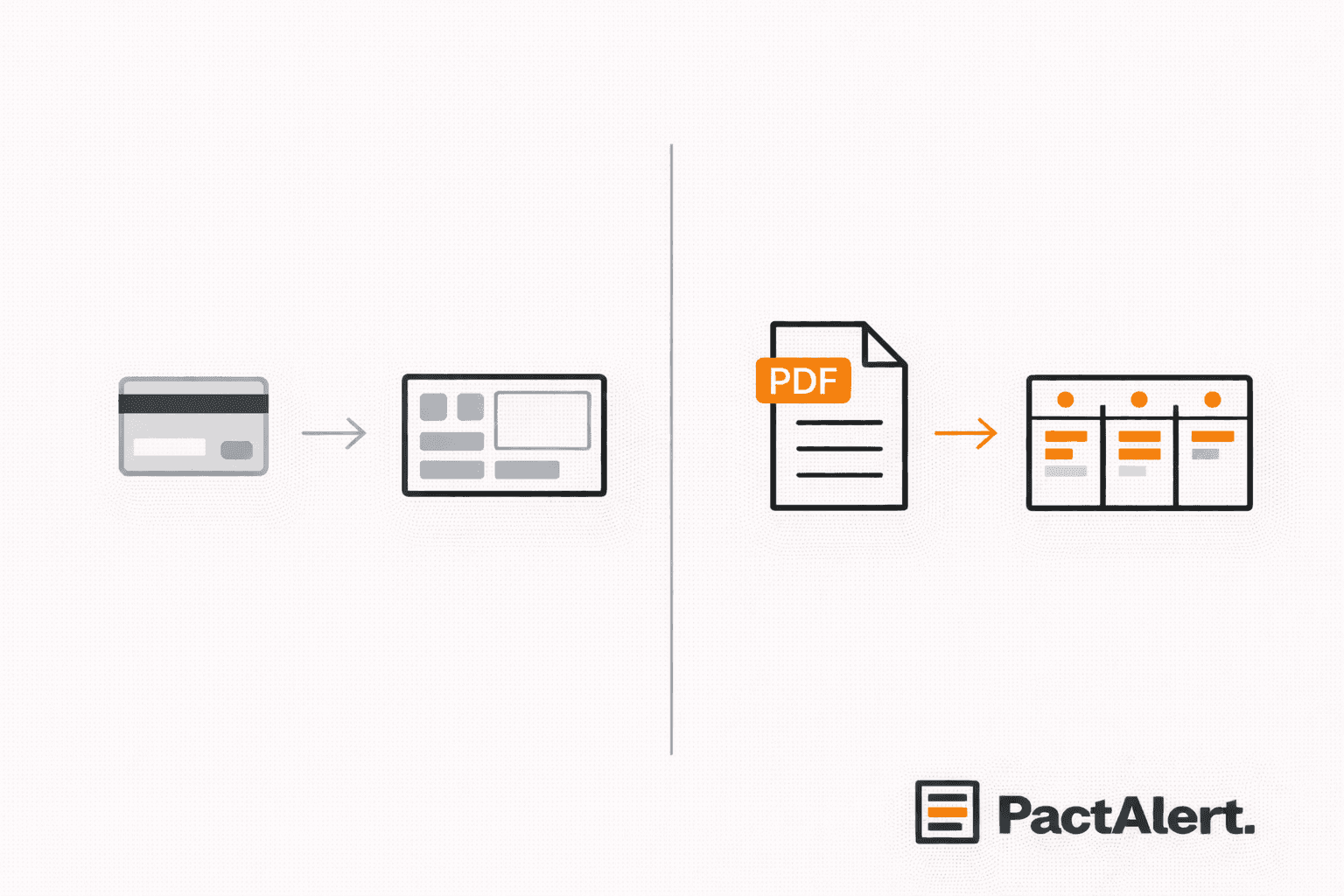
Let's be clear upfront: Cledara is a good tool. If your main problem is "I have no idea how much we're spending on SaaS," Cledara solves that.
But if you're looking for a Cledara alternative, you're probably hitting one of its limitations. Maybe you don't want to change all your payment cards. Maybe you need to track more than just SaaS. Maybe you need to know what your contracts require you to do, not just what they cost.
Here's an honest breakdown of what Cledara does well, where it falls short, and who should use what.
What Cledara Does Well
Credit where it's due. Cledara is solid at what it's built for:
- SaaS spend visibility - See exactly how much you're spending on software, broken down by tool, team, and time period.
- Virtual card management - One card per subscription. Easy to freeze or cancel. No chasing vendors.
- Real-time dashboards - Live updates on spending. Know the moment a charge hits.
- SaaS discovery - Find shadow IT and subscriptions you didn't know existed.
- Cashback - 2% back on SaaS spend. That adds up.
If your problem is "I need to control and track SaaS spending" - Cledara does that well. Pricing starts at $75/mo for up to 20 apps, $200/mo for up to 75 apps.
The 3 Limitations for Growing Teams
Here's where the "Cledara alternative" search usually starts:
1. Requires Changing All Your Payment Cards
To use Cledara, you need to pay for SaaS through their virtual cards. That means migrating every subscription to a new payment method. For a 50-person company with 40+ tools, that's a significant operational lift. Not every vendor accepts virtual cards smoothly. Your finance team has to rebuild their processes. Some companies aren't ready for that.
2. Only Tracks SaaS Subscriptions
Cledara is built for software subscriptions. But you probably have just as many non-SaaS contracts: vendor agreements, client SOWs, employment contracts, office leases, service agreements, consulting retainers. Cledara doesn't touch those. You need a separate system for everything else.
3. Tracks Spend, Not Obligations
This is the big one. Cledara shows you what you're paying and when renewals hit. But it doesn't extract what your contracts actually require you to do. It doesn't distinguish between notice periods and renewal dates. It doesn't track deliverables, compliance requirements, or SLA commitments. And it doesn't create tasks in Jira or Notion - just sends email alerts.
The spend vs obligation gap matters more than people realize. 95% of organizations lack visibility into their contractual obligations. Knowing what something costs is different from knowing what you're required to do.
Who Should Stick with Cledara
Cledara is the right choice if:
- Your #1 problem is SaaS spend visibility and payment control
- You're ready to migrate all SaaS payments to virtual cards
- You mainly need to answer "how much are we spending on software?"
- You have a separate system for non-SaaS contracts
- Email renewal reminders are enough for your workflow
Who Needs Something Different
Look for an alternative if:
- You need to track obligations across ALL contract types, not just SaaS
- You want alerts during notice periods (when you can still act), not just renewal dates
- You need tasks created in Jira, Notion, or Trello - not just email alerts
- You don't want to change your payment infrastructure
- You need to know what contracts require, not just what they cost
Cledara vs PactAlert: Quick Comparison
| Feature | Cledara | PactAlert |
|---|---|---|
| Price | $75-500/mo | $29-129/mo |
| SaaS tracking | ||
| Vendor contracts | ||
| Client SOWs, leases, employment | ||
| Obligation extraction | ||
| Notice period alerts | ||
| Jira/Notion/Trello integration | ||
| Requires payment card change | Yes | No |
| Spend visibility | ||
| Virtual cards / cashback |
You Might Need Both
Here's something the typical "Alternative to X" page won't tell you: Cledara and PactAlert solve genuinely different problems. They're not really competitors.
Use Cledara to answer:
"How much are we spending on SaaS?"
Use PactAlert to answer:
"What are we contractually obligated to do?"
If you need both answers, use both tools. Cledara for spend management and payment control. PactAlert for obligation tracking and notice period alerts across all your contracts.
If you only need one of those answers, pick the tool that solves your actual problem.
Need obligation tracking, not spend tracking?
PactAlert extracts obligations from any contract type and creates tasks in your PM tools. No payment card changes required.
Start free